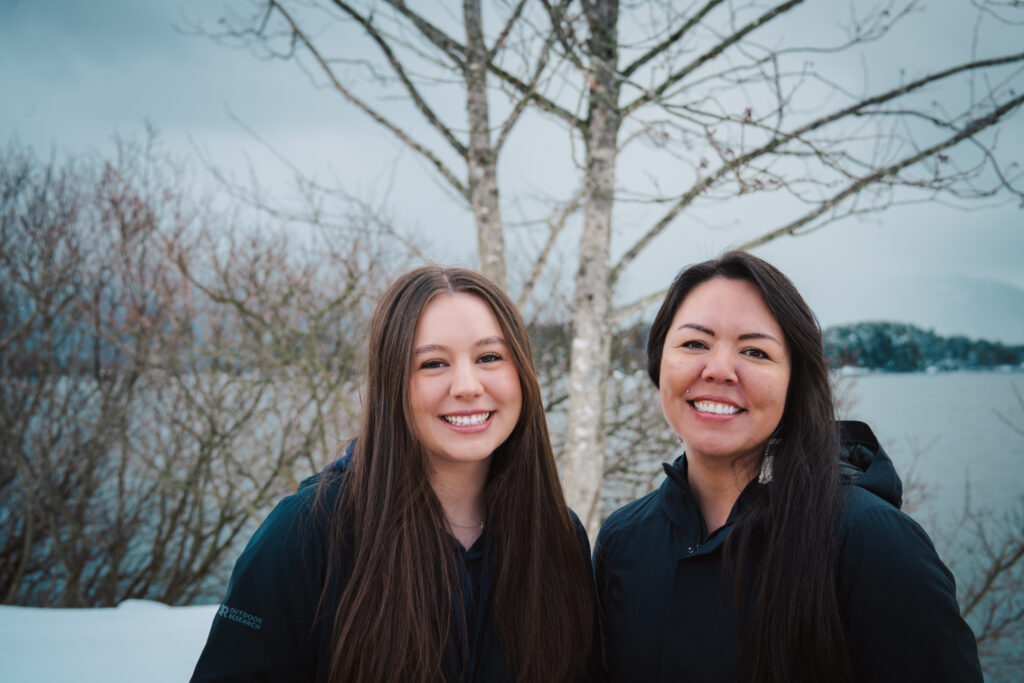
Angie with her daughter and business partner, Kayaaní. Photo courtesy of Angie Ketah
The last ships have left town, salmon are swimming upstream, and fall is in full swing. For many small businesses across Southeast Alaska, the transition to a quieter winter lends itself to focusing on local patrons and community collaboration. Our region’s seasonally-driven economy allows entrepreneurs the opportunity to connect with and give back to their communities once the hustle of summertime slows down.
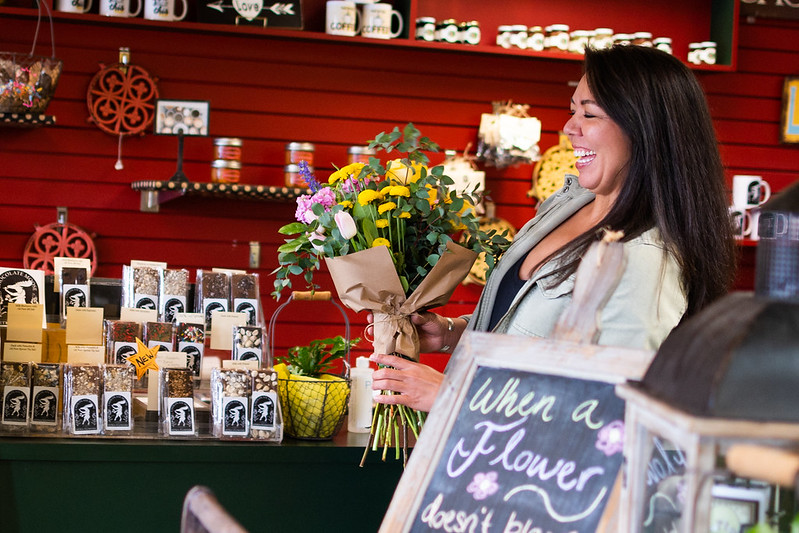
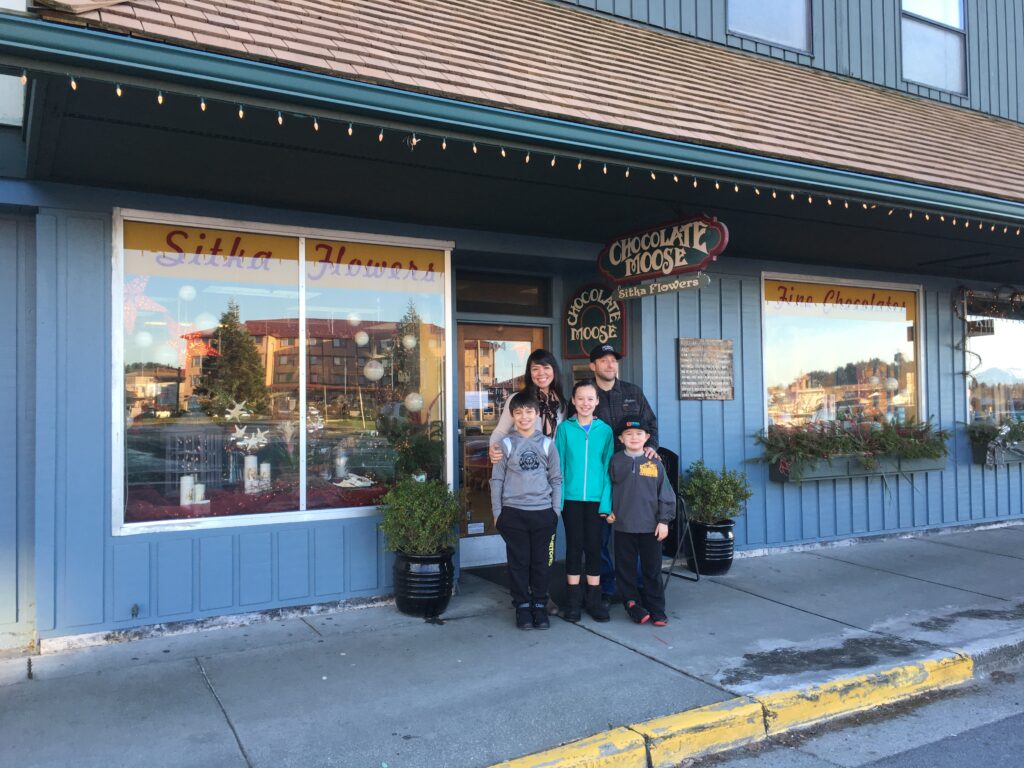
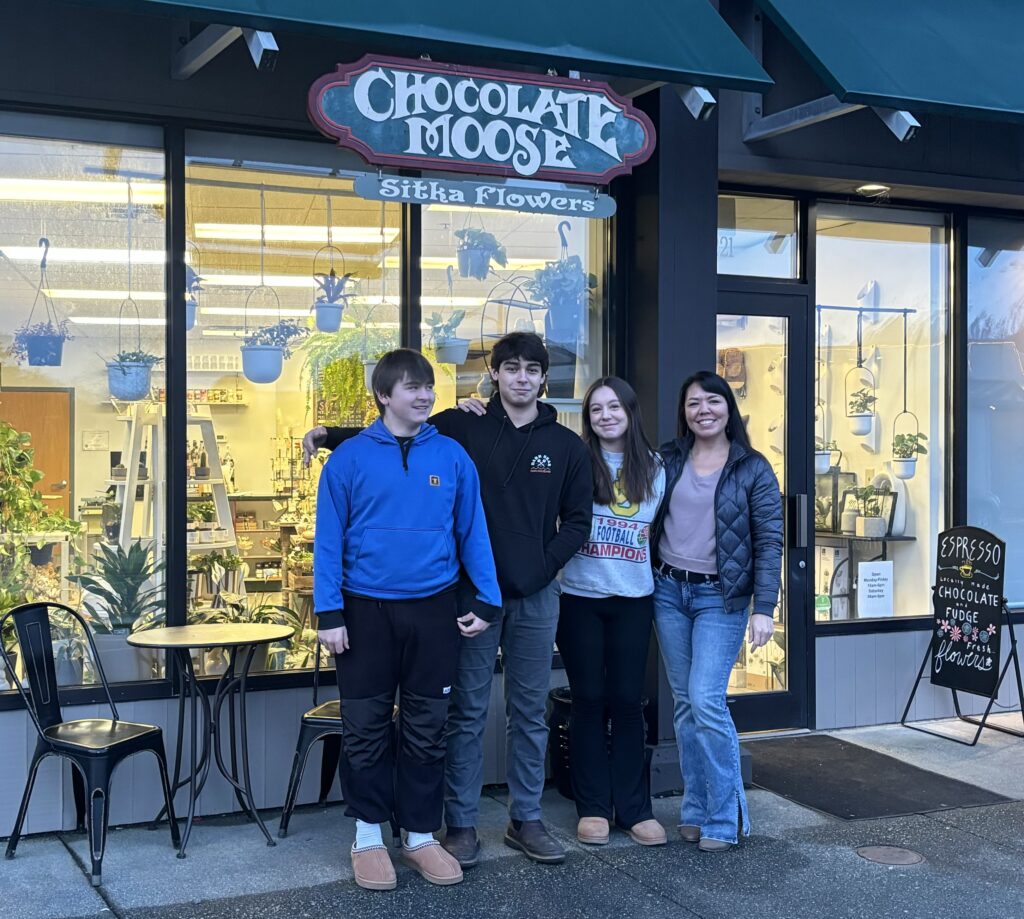
This is front of mind for Angie Ketah, owner of Sitka Flowers & The Chocolate Moose. For nearly a decade, Angie has offered house-made chocolate, fresh flowers, and cafe drinks to locals and visitors in downtown Sitka. As she thinks about what’s next for the storefront, Angie, alongside her business partner & daughter Kayaaní, has been working to transform their space into a community gathering space and creative hub.
We caught up with Angie before her business’ big rebrand to chat about what’s in store this coming season, and how her time in Spruce Root’s second Resilience Circles cohort has shaped her approach to community-centered entrepreneurship.
Interview by Erin O’Farrell, edited for clarity
Now that we’re past the summer rush, what are you doing to gear up for the fall and winter season in Sitka?
Right now I’m on my way to pick up plants. We know that once fall comes, people are like, ‘I need something green inside my house.’ We always do well with plants in the fall.
We are also selling watercolor painting kits and terrarium kits right now. Sitka is such a creative community. I think everyone is looking for a little joy and creativity once the winter hits.
And we are planning events. We’ve had a lot of requests to host different floral-related classes. We want to create a more regular schedule for these types of offerings.
You have owned your business for almost a decade now – congratulations! What has your journey been like with this storespace?
I started working at the shop in 1997 when I was in high school, and worked there for around seven years, leaving for a bit to attend school and then coming back.
The shop’s previous owner, Jackie Caywood, called me in 2015 when she was ready to retire. And that’s when I went back. By the next January, I bought the business.
In 2024, we moved locations. That was a challenging time.
Our sales were down. We had the lowest summer we’ve ever had. I had already spent a year planning the move, which was very costly – we paid rent at two locations and had to close for a couple of weeks to make the physical move happen.
I was pretty exhausted and had nothing left in me. I was really stuck.
And that was when my daughter, Kayaaní, stepped up. She’s worked at the shop since she was eight years old. She was 18 at the time, had just graduated from high school, and took over the day-to-day operations.
That allowed me to take a step back. I got another job. I started making a bunch of art. I went on a lot of walks and thought about a business plan.
A full year later, I finally had some clarity and that’s when we had the idea to open the cafe. Now, we are working to build out the cafe concept even more so it feels like a community gathering space.
It sounds like you’re going through a bit of a rebrand. What can you share about what’s next?
We are trying to incorporate all the elements of our story and bring a little more indigeneity into the shop overall.
When we started thinking about this new chapter, Kayaaní and I took the perspective that someday this is probably going to be hers. How do we make a change that I like and that Kayaaní can take over and tell her story with?
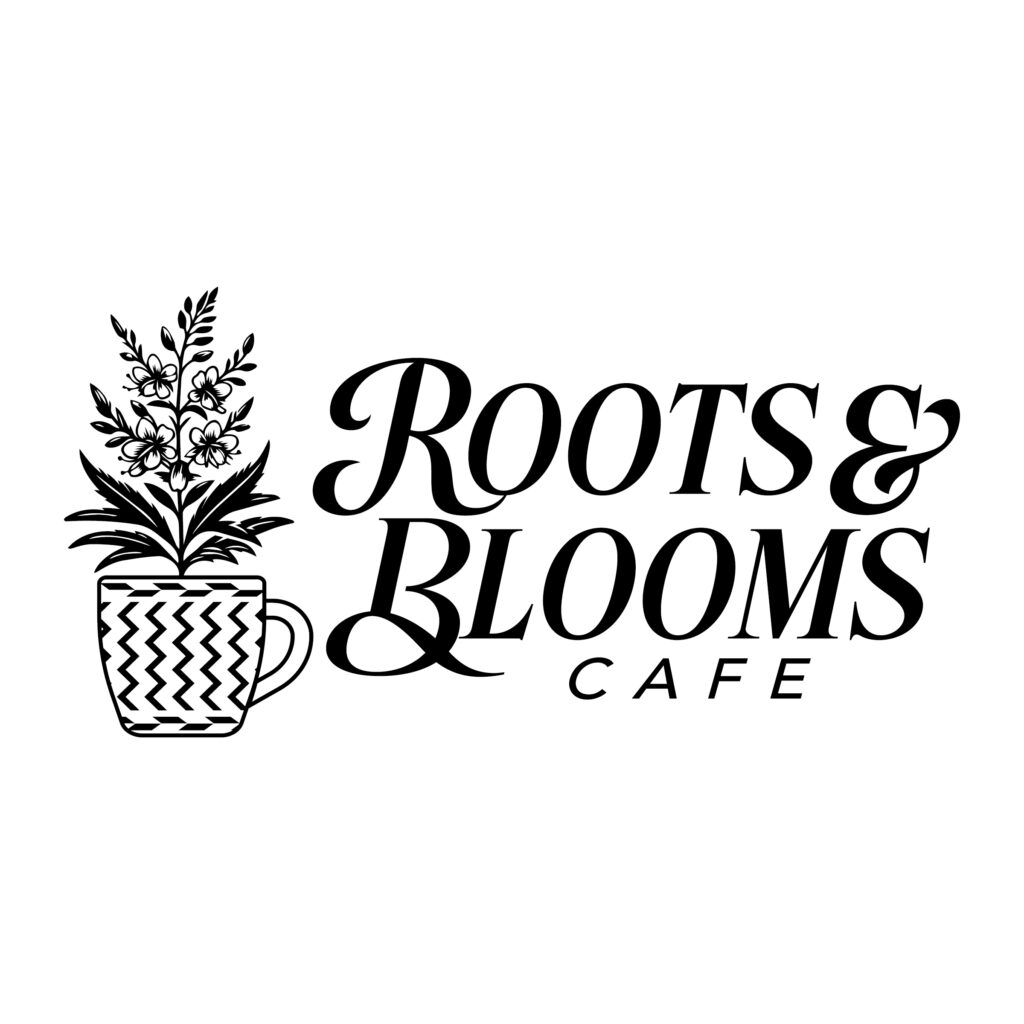
We decided on a new name: Roots and Blooms.
The name is a nod to our traditional roots and roots in the community. It is also a nod to Kayaaní taking over and blooming in her role.
Kayaaní translates to “little leaves” from Lingít. It can also be used to describe the color of spring green, or spring buds. Kayaaní’s Lingít name is also part of the inspiration for our renaming of the store. When she was born, as the oldest daughter between my sisters and me, her Grandma Shg’até (Jessie Johnnie) named her Kʼeikaxwéin, which means “flower”. She told her that as the oldest grandaughter, she was the root of the family.
The new logo for the business is a coffee mug with flowers coming out of the top. On the mug, there are some Ravenstail designs, which is the type of art I do.
We are also going to have a chocolate brand, called ‘Orkas’, which is my family and our dog’s initials. My last name, Ketah, comes from the Lingít word kéet, which means ‘killer whale’.
So at Roots and Blooms Cafe, you’ll be able to purchase Orkas Chocolate. It’ll have its separate formline logo, which my cousin, Justin Ketah, is going to design.
This opens up an avenue where we can sell something that visitors can take home, and locals can buy as stocking stuffers and gifts.
How exciting! What’s your vision for the new Roots and Blooms space?
I’ve always wanted to have a gathering space for creators.
My friends are all artists in some way. And back when our kids were little and we didn’t have such demanding jobs and full schedules, we would gather once a week and create together all day. I want to cultivate a space where people are able to do that.
I want the cafe to be a space to know people on a deeper level than just exchanging money for coffee, whether that’s locals meeting up or a place for visitors to sit and gather during the summer months.
I want to feature artists and their work in the space, too. I’d love to have Indigenous and local artists’ work, including mine and my daughter’s jewelry. People are very interested in the story behind what they’re purchasing. And I love when the story is really localized.
You were a part of our second Resilience Circles cohort. What are you taking away from that experience?
I feel like I have really bonded with my cohort and Spruce Root staff over the last year. We’re all pretty invested in each other’s future and success at this point.
Throughout the program, I learned to give myself some grace. I’m not very forgiving with myself and I expect things to get done when I say they’re gonna be done. I can be pretty hard on myself if that doesn’t happen.
But things are out of our control. A big part of the cohort was learning to relax and take care of yourself physically and mentally. You’re going to manage things like your financials or your marketing techniques a lot more successfully if you’re at a place where you’re not constantly stressed out.
I also learned to be willing to ask for help and rely on people.
When you’re a business owner, it can become a habit to do everything yourself. But another thing we learned throughout the Resilience Circles program is that it really comes from our community. We have to bring the community into our story; our success is not just our own.
I’ve learned to make good decisions financially, with purchasing and hiring and all of those different things. But our stories and the people that support them are incredibly important, too.