
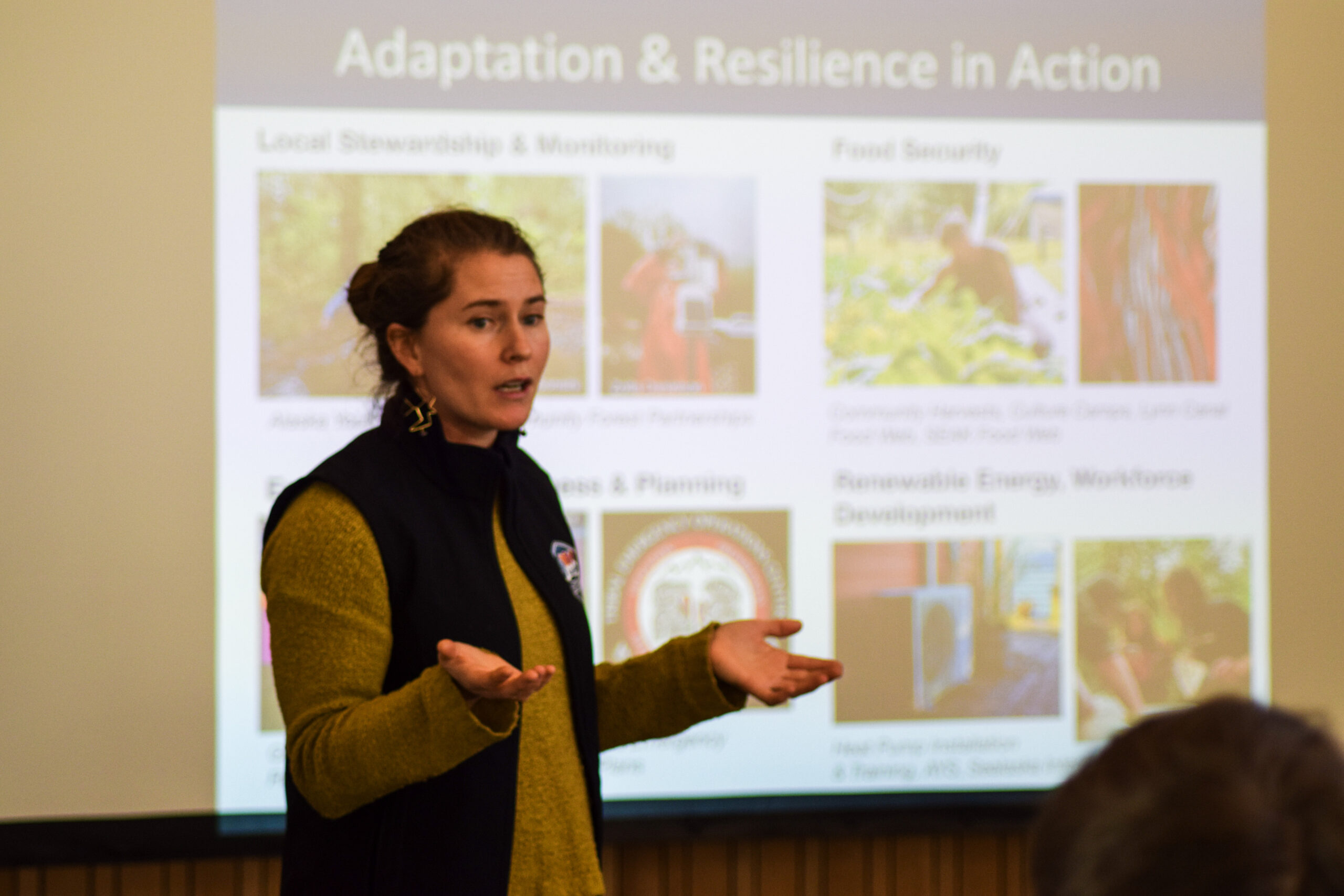
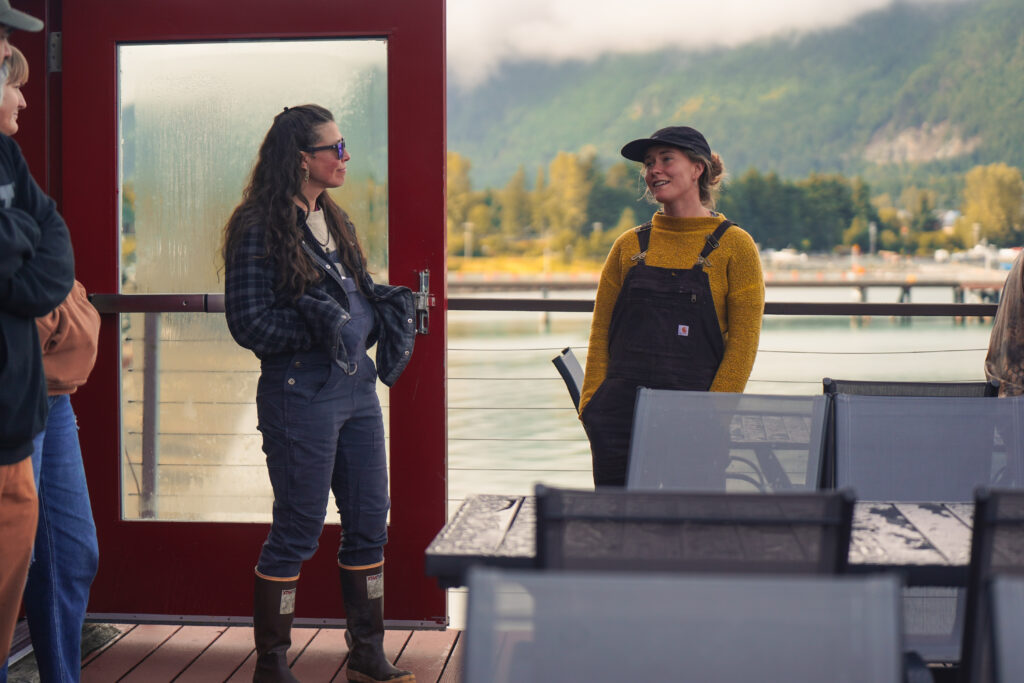
Annika Ord speaks with other Sustainable Southeast Partnership Catalysts during their Fall Retreat in Deishú/Haines this September. Photo by Shaelene Grace Moler
Southeast Alaska is no stranger to the impacts of climate change. From last winter’s extreme snowfall to more frequent landslides and changing seafood harvests, the impacts of our rapidly changing world ripple through the entrepreneurs and businesses making a living in our region.
As the Sustainable Southeast Partnership’s Climate Adaptation Catalyst, Annika Ord spends much of her time thinking about how our communities can be stronger in the face of a changing climate. Annika is one of our guest facilitators for Spruce Root’s virtual Master Class this November. Ahead of her session, we caught up to chat about how climate resilience is linked to small business success and to get a preview of what she plans on presenting at the class.
Interview by Erin O’Farrell, condensed for clarity
You spend a lot of time thinking about climate adaptation and resilience in our region. How do you define climate resilience?
Climate resilience, at its core, is tied to notions of responsibility, reciprocity, and the importance of strong relationships in moving through times of change.
When I think about climate resilience, I really think about the power of relationships and of our responsibilities to our communities, the land, and waters. We’re all in relationship with each other. The ways that we receive and also give back have the ability to build a really strong web that can help us adapt, move through change, and lean on each other when we need support.
How have you seen climate change impacting small businesses throughout our region?
Shipping delays, extreme weather, landslides, events like the outburst flood that we have in Juneau, last winter’s extreme snow… All of these things affect small businesses and their ability to stay open while dealing with huge additional costs that come from climate events.
As we see more conflict around the world, which is intertwined with and driven by climate change, fuel and supply costs are rising. All of that affects the bottom line of small businesses trying to make a living in our communities.
Conversely, I think when you have a strong relational network, people take care of each other. Businesses are a part of that. You see businesses stepping up to support neighbors and provide services during extreme weather events and other upheavals in our communities. And people also show up for businesses to help shovel off roofs and lay sandbags.
How have you seen small businesses planning to become more climate resilient?
I have seen businesses stepping up to support local producers to foster a circular economy.
I think of businesses like Juneau Composts that recycle waste into new soil. Or efforts to stand up the second-growth timber industry and create value-added products that can stay in communities or help build homes. I think about restaurants like Deerheart (a Spruce Root client!) in Deishú (Haines) that are sourcing local foods and supporting local growers, fishermen, and harvesters.
These business models embrace many principles of what it means to be resilient as a community, adapt through change, and uphold our local economies.
Can you tell us what your Master Class session is shaping up to look like?
I want to take some time to think through some of the climate impacts we’re seeing in our region and ask participants how these forces are interacting with their business plan and operations.
Then I plan to share some examples of how people are adapting and responding to these times of change in our communities. There are many examples and lessons that we can draw on. Indigenous communities have a history of adaptation here for thousands of years that we can learn from. And we can pull lessons not just from climate change impacts, but also from COVID or federal funding disruptions.
Spruce Root has put together a resource of Climate Resiliency Guiding Principles to support small businesses, individuals, and workforce development efforts as they prepare for and adapt to the challenges and opportunities of a changing climate.
I hope to lean into these principles and spend time thinking about steps businesses could take to be proactive instead of reactive. I’d like to connect folks to tools and resources that are available to businesses as they’re doing this planning.
And I want to recognize the value of relationships, networks, and strengthening community partnerships. I’d like to think through how running a business is an opportunity to strengthen the broader communities we’re all a part of. If our communities are strong, it supports businesses being strong as well, it’s a really reciprocal relationship.
What do you hope that folks might learn or see differently after your session?
I hope people feel like being part of climate adaptation and climate resilience in their communities doesn’t mean totally overhauling what they’re already doing.
Climate adaptation can mean taking small steps that strengthen the networks within your community and business more broadly. It’s thinking, for example, ‘Maybe these waste streams can be more circular, and perhaps I can work with a local composting group.’
Supporting a strong community is inherently climate work. Building climate resilience can mean supporting community events, leaning into your community’s support networks, and helping strengthen them. Maybe it’s waste streams, maybe it’s community support, maybe it’s renewable energy, maybe it’s providing opportunities for youth, maybe it’s funneling money back into our community trails through the Tongass Stewardship Fund.
I hope people see themselves already doing this work and that Master Class can be a space to lean into it a little deeper and think about how to amplify their impact.
Want to join Annika’s session and learn more? Register for this November’s virtual Master Class here!